Get an Autism Evaluation
Without the Waitlist
Speak with a Pediatric Developmental Psychologist in Days, Not Months.
Board-Certified Pediatric Psychologists
Trusted by AZ Families Since 2014
100% Privacy Guaranteed
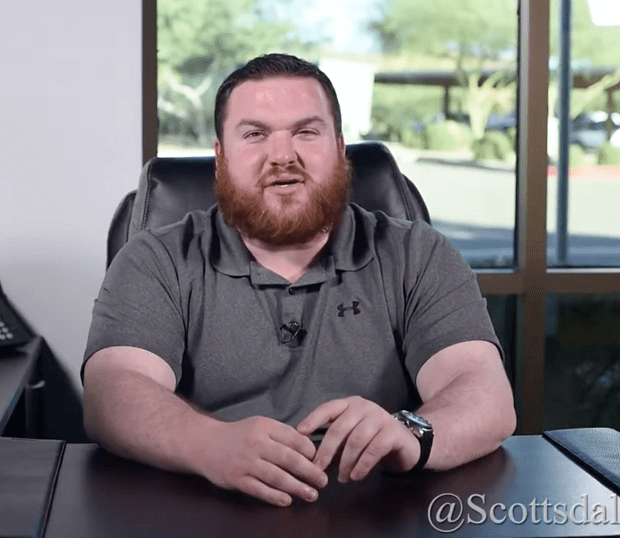
Schedule Free Consult Get DirectionsSchedule A Free 15min Phone Consult with Dr. Jacob
Comprehensive Diagnostic Evaluations for Children 1 → 10 Years Old
Worried About Your Child’s Behavior? Speak with a Pediatric Psychologist
Not Sure If It’s Autism or Something Else? Talk to a Specialist for Free
We Accept Insurance
Scottsdale PBS is in-network with Aetna, Blue Cross Blue Shield and Cigna.
We work with you every step of the way to get our services approved for your child.



Experience the Difference at Scottsdale PBS
Parenting a child with unique needs can feel overwhelming, isolating, and exhausting. We understand — many of our families felt the same way before finding us. Here, you’ll find a safe space where your questions are answered, your worries are heard, and your child’s future feels full of possibility again.
1
Relief from endless waitlists
2
Guidance that respects your family’s values
3
A team that listens, not just prescribes
4
A clear plan you can trust

Autism Spectrum Disorder (ASD)

Oppositional Defiant Disorder (ODD)

Obsessive Compulsive Disorder (OCD)

Sensory Processing Disorders (SPD)

Speech & Language Skills

And More
Not Sure If It’s Autism, ADHD, or Something Else?
Many parents come to us feeling unsure what they’re seeing. Is it ADHD? Autism? Anxiety? Behavioral challenges? Something else?
The reality is, many developmental and behavioral conditions share similar signs. Difficulty focusing, emotional outbursts, social challenges, or impulsivity can point to different diagnoses or a combination of them. Our board-certified pediatric psychologists specialize in comprehensive evaluations, helping you understand exactly what’s going on and what to do next.
Book a Free 15-Min Consult
Comprehensive Developmental Evaluations
We assess attention, behavior, emotional regulation, social development, and cognitive functioning across environments.
ADHD, Autism, Anxiety & More
We evaluate for ADHD, autism spectrum disorder, anxiety disorders, ODD, and related developmental differences.
Identify Co-Occurring Conditions
Many children have more than one diagnosis. We assess for overlapping conditions so nothing is missed.
Clear Diagnosis and Action Plan
You’ll leave with a detailed report, a clear diagnosis (if applicable), and specific next steps for support.
Not Sure What Your Child Needs? Start With a Free Call
Get answers about your child’s developmental needs in a free, no-pressure 15-minute phone consultation with one of our specialists.
Speak Directly With a Doctor
Talk 1-on-1 with a pediatric psychologist about your child’s needs
Just 15 Minutes
Get meaningful insights without a lengthy time commitment
No Obligation
Ask questions and explore options with zero pressure
100% Confidential
Your child’s privacy is always protected
Free 15-min Consultation
Talk 1-on-1 With a Pediatric Psychologist
Worried about your child? Get expert guidance today.
Discuss your child’s specific challenges
Learn about diagnosis and treatment options
Get your questions answered
Review insurance coverage
Call Now — It’s FreeOur Treatment Plan Starts With You
A Free Consultation Helps Us Evaluate Your Child’s Needs and Goals
We take a customized approach for every patient who enters our doors. That’s why we only develop a treatment plan once we’ve had the chance to chat with you and your child, introduce you to our capabilities and facilities, and decide whether we’ll be a good match for your child.
1
Free 15-Minute Phone Call
We’ll start with a friendly, no-obligation phone conversation to learn more about your child. We’ll talk about any previous diagnoses, treatments, school insights, and behaviors. We’ll also review your insurance and go over any costs involved.
2
In-Person Visit
You and your child will visit our beautiful Scottsdale campus. You’ll meet our team, see the space, and get a feel for what a day in our program looks like.
3
Creating a Plan That’s Right for Your Child
We’ll take time to get to know your child through an in-depth assessment. This helps us build a care plan that truly fits their needs. Once complete, we’ll review it with you and send it to your insurance provider to move forward with services.
Assessment
Early Intervention
Parent Training
Language Skills
Problem Behavior Reduction
Play & Social Skills
Self-Care and Development
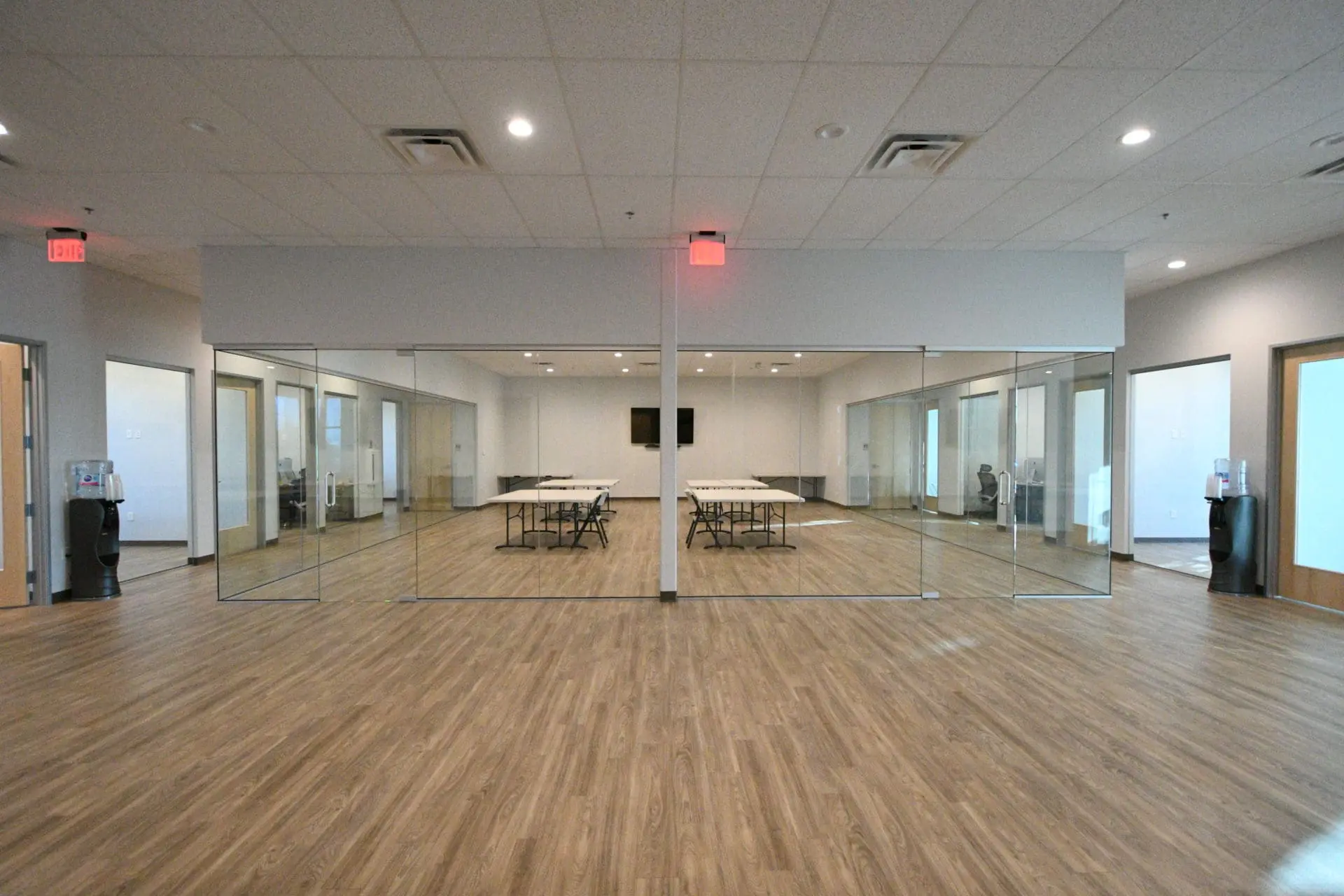
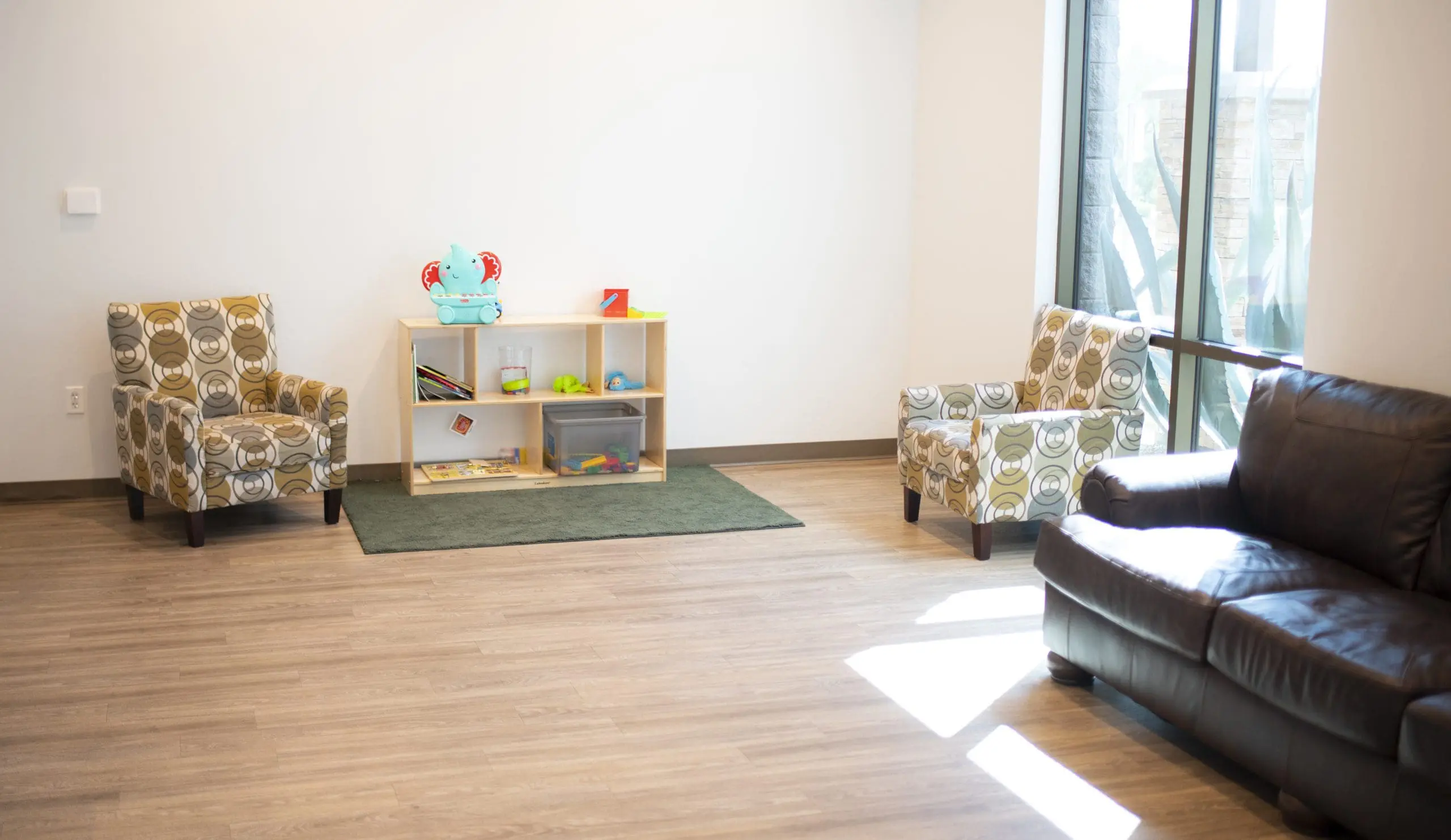
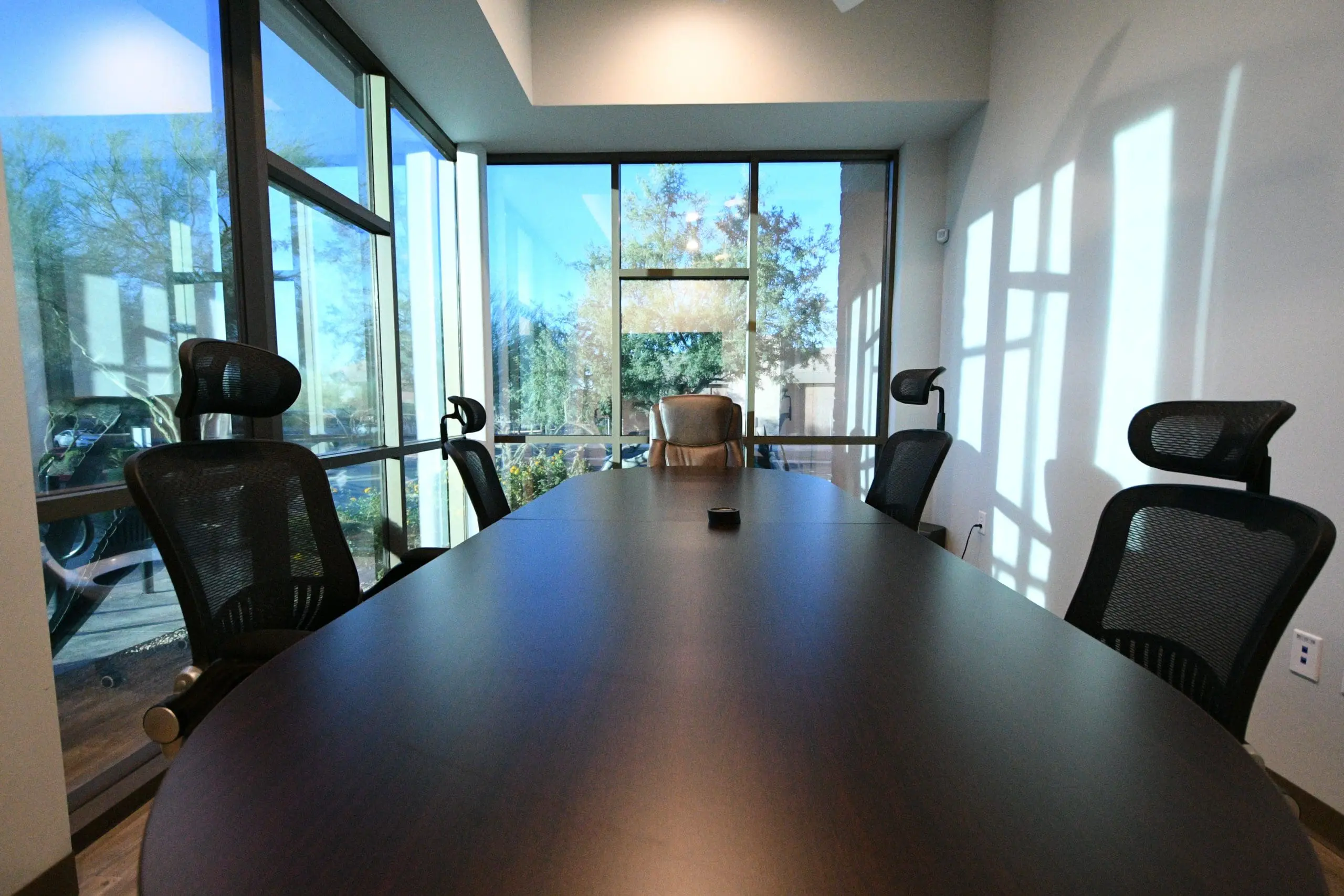
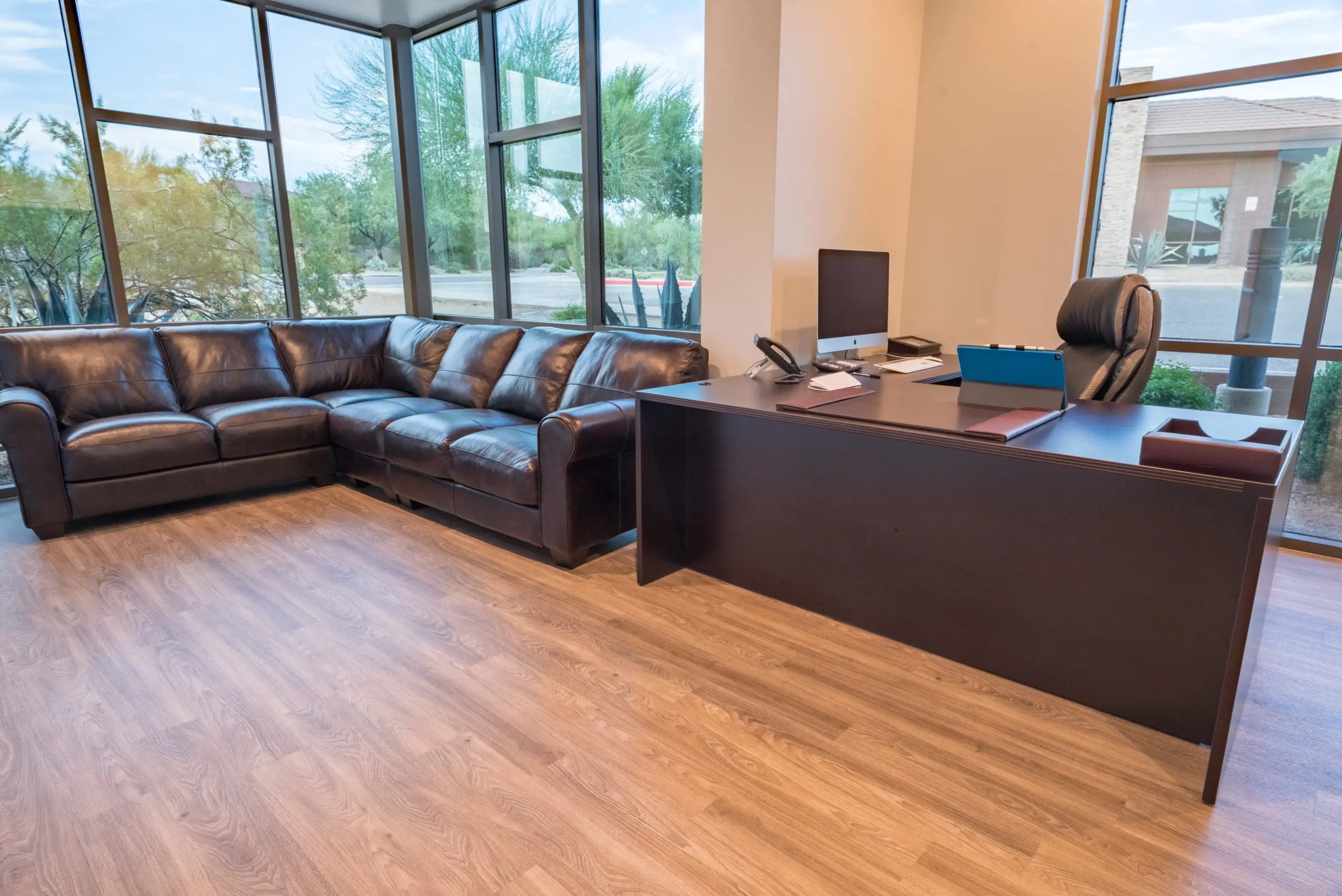
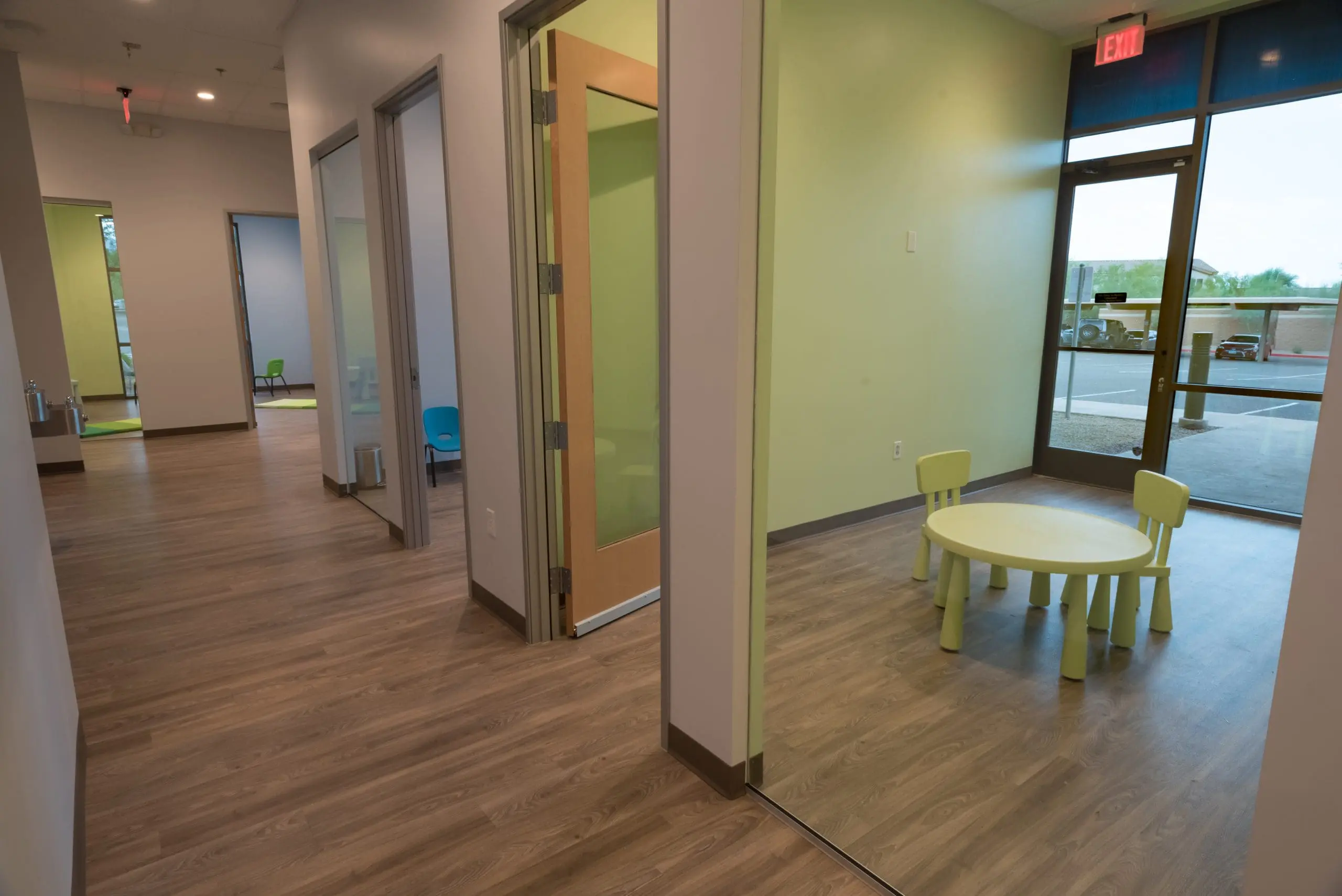
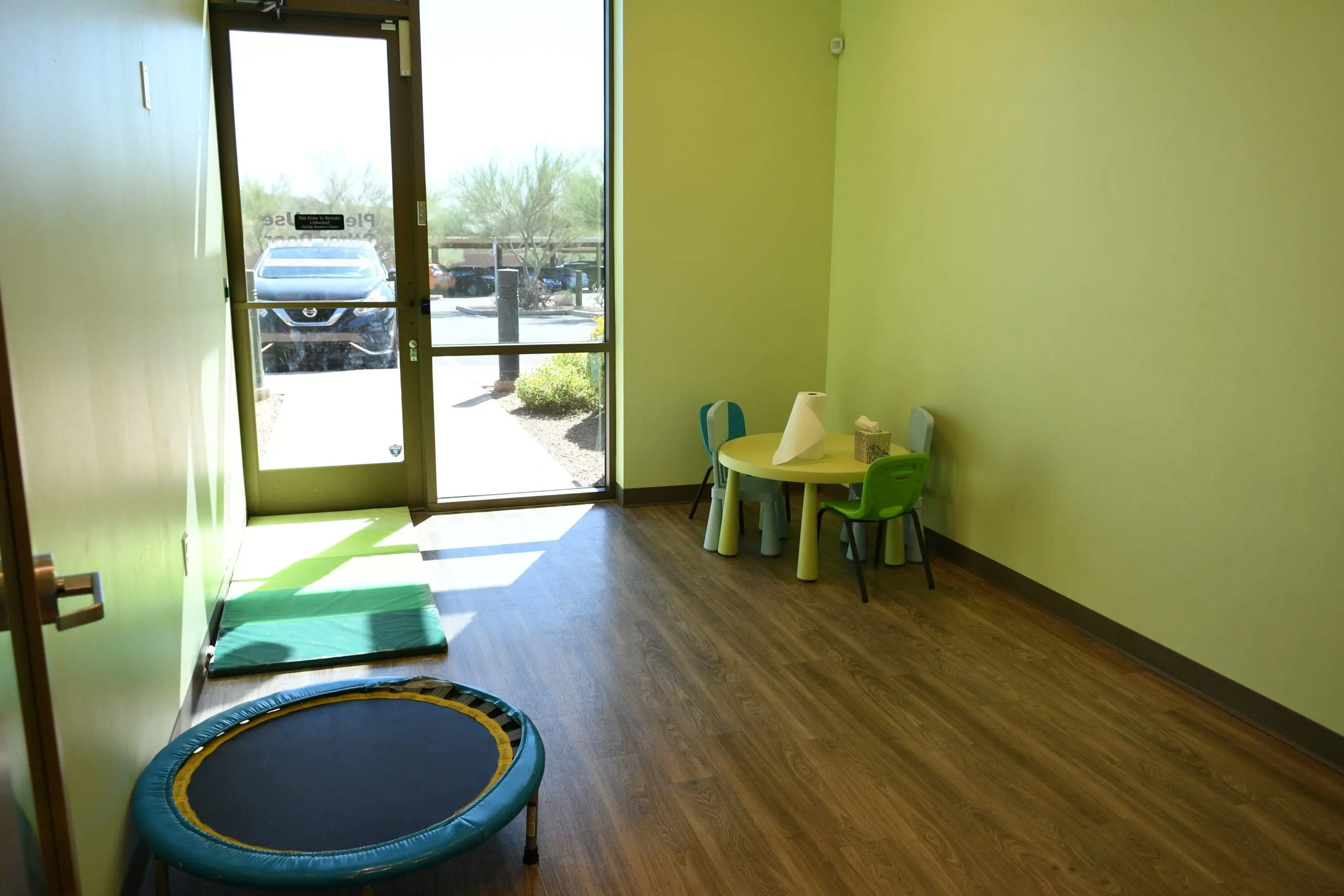
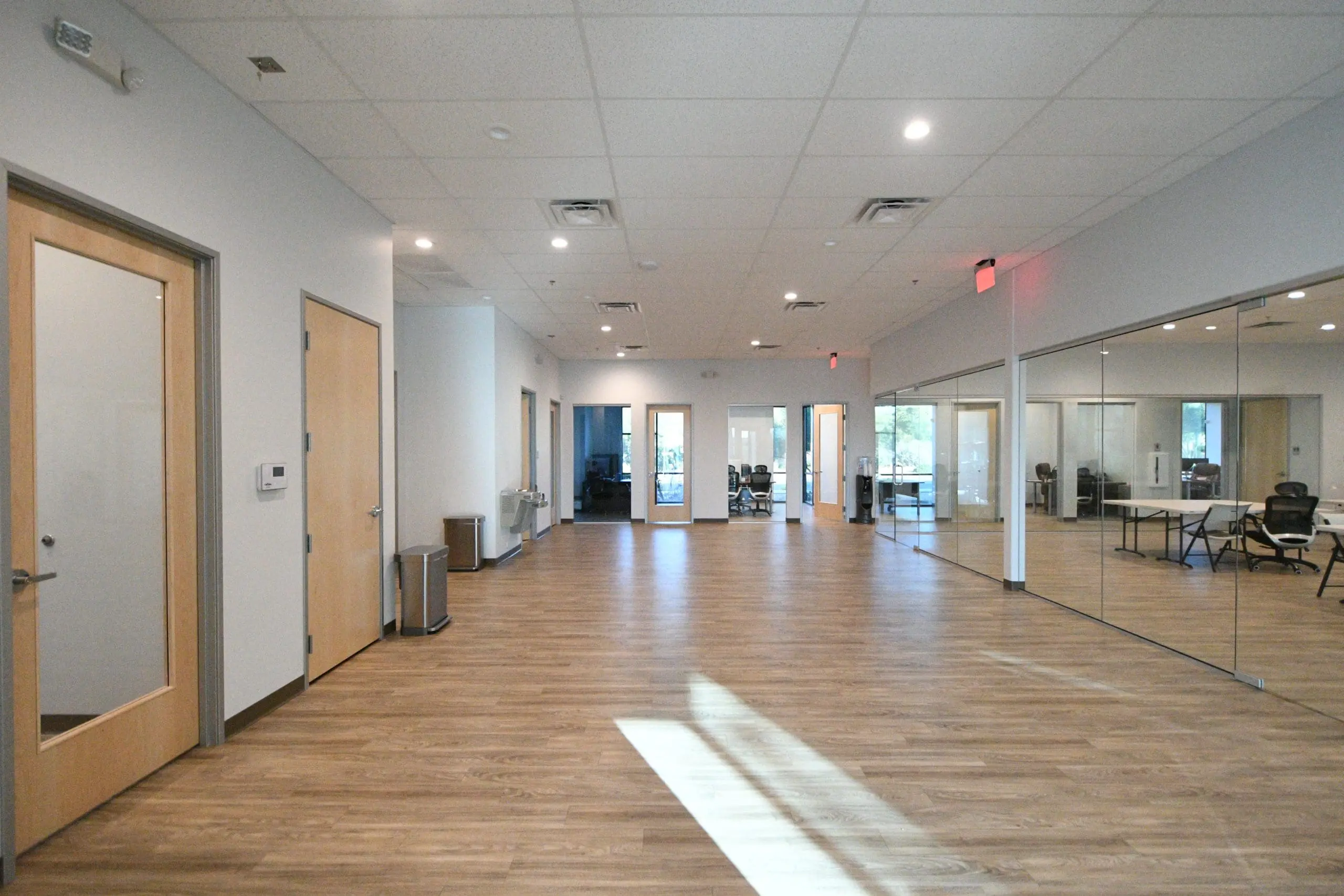
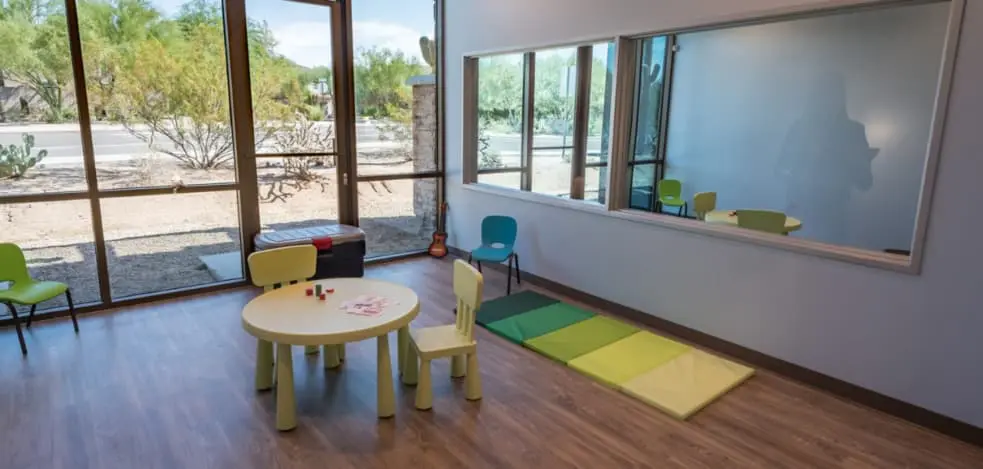
Our 17,000 ft2 Facility
The moment you set foot in our clinic, you’ll notice we’re different.
Our engaging, comfortable, and state-of-the-art grounds and classrooms create a warm space that you and your child will be happy to claim as a second home.
We’ve helped hundreds of families address problem behaviors and discover personalized solutions tailored to their unique challenges. Our curriculum and treatment are developed from decades of experience, combining expertise with compassionate care that delivers real results.
TAKE A TOUR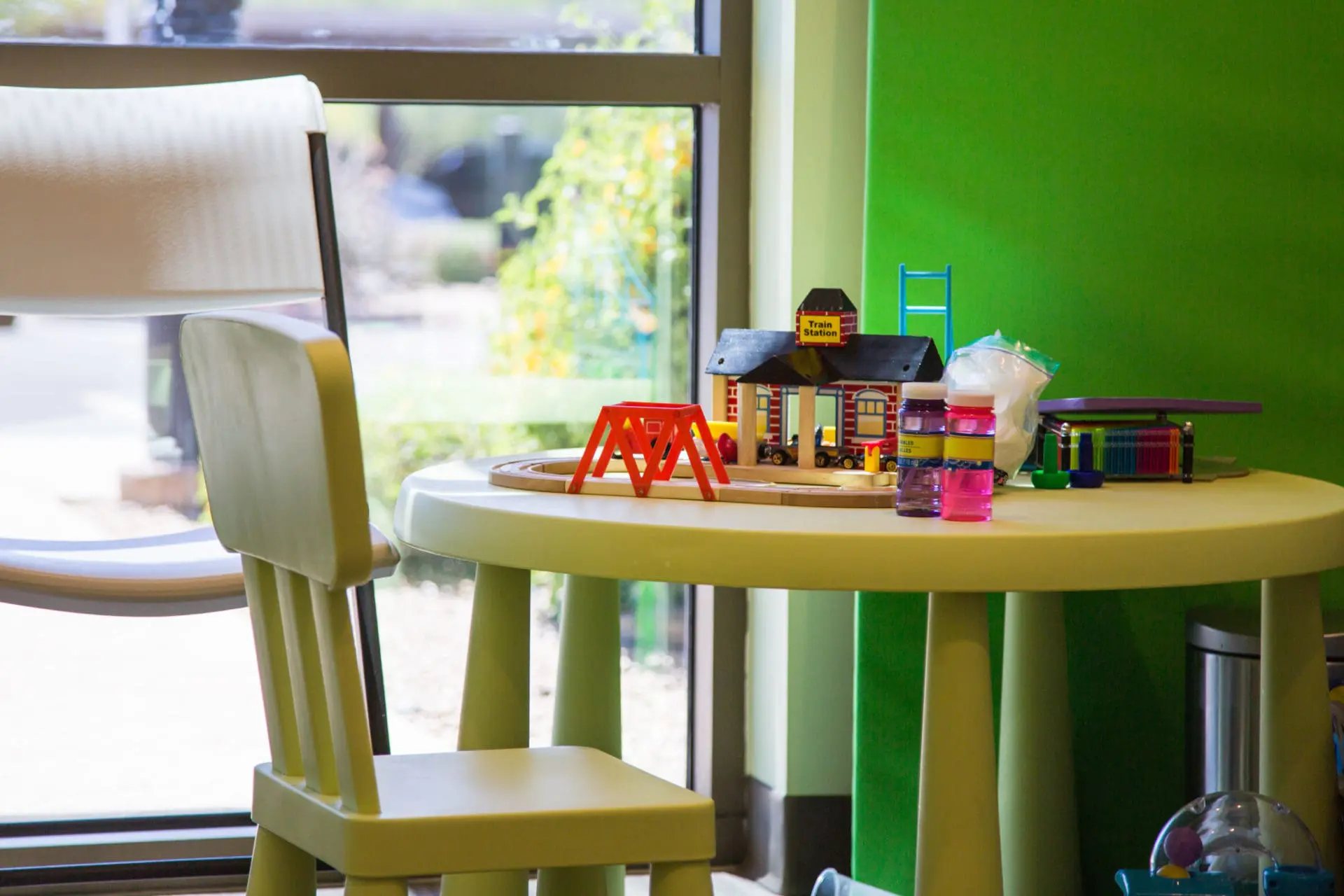





Frequently Asked Questions
Answers to Common Parent Questions on Autism Diagnosis
Autism is called a spectrum disorder because there’s a big range of symptoms people experience. Some kids have strong verbal skills but struggle with social cues, others are nonverbal but great at pattern recognition. Some need lots of daily support, others live independently as adults. That’s why we call it a spectrum.
Autism causes two primary types of behaviors — restricted or repetitive actions and social, communication, and interaction behaviors. For example, some common signs of an autism disorder include:
- Repeating certain behaviors
- Demonstrating unusual behaviors
- Having overly focused or restricted interests
- Having a lasting and intense interest in a specific topic
Children with autism may also have increased sensitivity to light, noise, temperature, or the texture of clothing or other surfaces. Some children have digestive problems, sleep disruptions, and overall irritability.
At Scottsdale PBS we combine several methods to get a full picture of your child’s abilities. This includes standardized tests, direct observations and interviews with you and other caregivers. Using research-backed tools helps make sure our assessments are accurate and reliable.
Some of the tools we may use include:
- BASC (Behavior Assessment System for Children): Measures behavior, emotions and social functioning at home and school
- Vineland Adaptive Behavior Scales: Done through caregiver interviews to check communication, daily living skills and socialization
- WPPSI (Wechsler Preschool and Primary Scale of Intelligence): Assesses cognitive skills and highlights strengths like visual-spatial reasoning and working memory
- NEPSY-II (Developmental Neuropsychological Assessment): Looks at attention, executive function and language processing to understand learning and behavior
The tools we use depend on your child’s age, the concerns we’re looking at and what will give us the clearest picture of their needs. This works together with our behavior-focused functional assessments to give a complete understanding.
Our evaluations follow the diagnostic criteria in the DSM-5 (Diagnostic and Statistical Manual of Mental Disorders, Fifth Edition). This means persistent challenges in social communication and interaction, plus restricted and repetitive patterns of behavior, interests, or activities. The symptoms have to be present from early development and cause significant impairment in daily functioning. We carefully assess each area to see if your child meets these specific criteria.
During direct observation, our psychologist watches your child interact, play and communicate in structured activities. We observe their eye contact, response to their name, interest in sharing experiences with others, and how they use toys or objects. We also look at their communication attempts, verbal and nonverbal, and any repetitive behaviors or focused interests. This assessment shows us how your child behaves naturally in different situations and helps us understand their unique behavioral patterns.
Our assessments cover five key areas to give a complete picture of your child’s development:
- Physical Development: We look at both gross motor skills like running or jumping and fine motor skills like grasping objects or writing.
- Cognitive Development: We assess problem-solving, memory, learning abilities and how your child understands and thinks about the world.
- Language and Communication: We check how your child understands and uses verbal and nonverbal communication including speaking, listening and expressing themselves.
- Social and Emotional Development: We watch how your child interacts with others, handles emotions, builds relationships and navigates social situations.
- Adaptive Skills: We look at everyday skills like dressing, feeding and personal hygiene.
We use developmental milestones, which are skills most kids achieve by a certain age, to guide us in seeing how your child is doing and where extra support could help.
Have More Questions?
Get answers directly from a doctor in a free 15-minute phone consultation.
Schedule Free ConsultationExplore Our Parent Resources
Resources, Common Questions, and Insights From Our Team.