
We take pride in every developmental milestone our children reach. That sweet little giggle after their very first laugh during peek-a-boo, the sense of pride when they willingly share a toy or a snack, or the sheer joy of hearing them say our name for the first time. Although these small, magical moments are precious in themselves, we may not realize they are forming the foundation for our children’s relationship skills and emotional regulation modeling as they grow up. For some children, though, the natural flow and rhythm of social interactions simply don’t click into place right away. They may find it hard to read facial expressions, wait for their turn when talking, or struggle to join group play, which can leave us as parents feeling unsure about the best way to support them. Difficulties like these sometimes appear alongside autism spectrum disorder, anxiety, developmental delays, or simply individual differences in temperament.
Evidence-Based Social Skills and Training
Developing social skills and emotional skills is vital to a child’s emotional growth, academic success, and ability to form lasting friendships. When these abilities progress more slowly, it can lead to a real danger of falling behind, but thankfully, focused training can help children build self-confidence and reduce frustration so they can keep pace. At Scottsdale PBS, we regularly witness how timely, purposeful practice helps children build confidence, reduce frustration, and succeed in social settings. Structured activities provide safe opportunities to practice, build confidence, and gradually transfer new skills to real-world situations such as the playground, classrooms, and family gatherings.
A comprehensive behavioral assessment for social skills in children provides clarity on your child’s individual strengths and growth opportunities. Experienced clinicians evaluate your child to pinpoint social skills and create an individualized plan that may include social skills training, ABA therapy, speech therapy, or occupational support. By pinpointing exactly where support is most needed, families receive guidance that feels practical and hopeful rather than overwhelming.
We have compiled the most effective, evidence-based social skills training techniques that both parents and therapists employ to foster development in children. These activities are engaging and flexible, and they strengthen social-emotional abilities. When practiced consistently in a positive environment, they allow children to feel more at ease when engaging with others.
Feeling Charades
Turn emotional learning into a silly, face-making game. Begin the fun by putting three basic emotions on slips of paper. Model an expression, like maybe a happy smile or exaggerated surprise, and invite your child to either mirror your face or match it to the slip, then trade places! As they grow more comfortable, introduce complex feelings like ‘frustrated’ or ‘proud.’ This playful back-and-forth builds a richer emotional language and a foundation of empathy, helping your child better understand and respond kindly to the feelings of peers and family.
Ball or Toy Car Rolling Games
It might seem too easy to be true, but a simple back-and-forth rolling game can teach the foundational skills for turn-taking, patience, and responding to nonverbal cues. Sit facing your child and roll the toy gently, focusing on encouraging eye contact and positive expressions (smiles) and laughter. Progress by adding basic verbal prompts like ‘your turn’ or ‘my turn.’ This practice reduces impulsivity and teaches children that waiting patiently leads to a rewarding outcome.
Mimicking Expressions
Mirroring emotions face-to-face can help children learn to read and respond to facial signals in real time. Start simply by making a happy face and inviting your toddler to copy it (a mirror game). Next, gently explore the feeling together by asking, ‘What feeling does this look like?’ This practice gives your child a powerful social tool by strengthening their ability to interpret subtle cues, helping them navigate conversations with confidence.
Soft Staring Contest
A gentle staring contest (or start simply by using a fun sticker on the forehead to give them a neutral focus) can help build the skills for maintaining comfortable eye contact—a key element of conversation and connection. Keep sessions very short and lighthearted to avoid overwhelming your child. Always praise effort, not ‘winning,’ to emphasize that eye contact is about sharing attention, not competition.
For many children on the spectrum, this caring, gradual exposure turns uncomfortable avoidance into a natural part of greeting friends or answering questions.
Playing Pretend
Using dolls, stuffed animals, or role-playing scenarios (like doctor, teacher, or family) allows children to practice social scripts in a safe, low-pressure setting. Pretend play fuels empathy and flexible thinking by letting kids experiment with different roles and responses. Guide gently by narrating actions—’The doctor is listening carefully’—and encourage turn-taking within the story. This technique helps children rehearse real-life success, from sharing a toy to resolving a minor conflict.
Card-Based Practice Games
Structured card games created for children with autism can model how to join discussions, stay on topic, and listen actively, crucial skills that carry over to everyday social interactions. Cards might prompt greetings, questions, or comments related to a picture. Practicing these steps repeatedly builds confidence for entering group conversations at school or birthday parties, reducing anxiety around unpredictable social moments. These scenarios and card based play in general is typically more effective for older toddlers and young children who already enjoy role playing.
Conversation Reinforcement Through Tower Building
For each successful turn in conversation, children receive a child-safe coin or token to stack, creating a tower that grows with every interaction. This progressive and fun, tangible element reinforces calm communication and patience. By building the tower over time, their interest in taking part in conversations stays engaged, and the social rules become visible: they can see their effort turn into a reward after each shared conversation.
Improvisational Storytelling
Taking turns adding to a shared story develops listening, creativity, and the ability to build on others’ ideas, valuable for group settings like classroom circles or collaborative play. Start with simple prompts (“Once there was a brave knight”) and model short additions. This activity strengthens narration skills and teaches children that conversations flow when everyone contributes and respects previous ideas.
Building Something Together
Collaborative projects such as block towers, Lego structures, or puzzles require clear communication, compromise, and shared celebration of success. Children learn to ask for pieces, suggest designs, offer help, and problem-solve when the structure falls. Celebrating the finished product together reinforces teamwork and helps children associate working together with a positive outcome.
Rhythm and Music Games and Rhymes
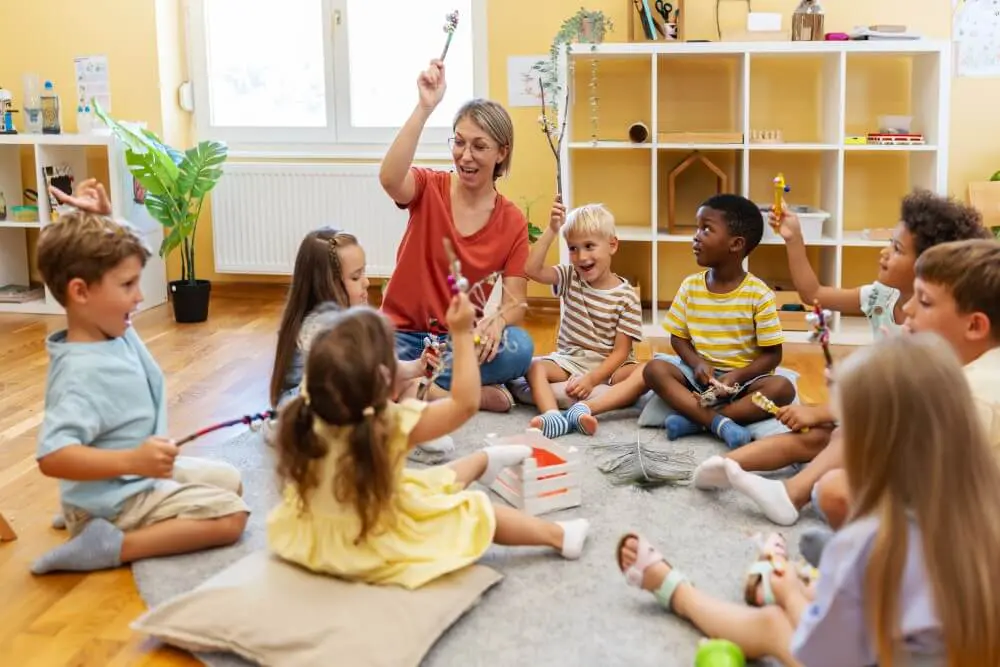
Joint music-making (clapping patterns, rhyming songs, or playing simple instruments together) promotes cooperation and emotional connection, as studies show music enhances social bonding. Copy rhythms back and forth or create a short song together. The shared timing and synchronization naturally encourage attention to a partner’s actions, making it easier for children to feel “in sync” during social interactions.
These methods work best when customized to your child’s age, interests, and needs, of course. Consistency and positive reinforcement help transfer practiced skills to real-life situations at home, school, or the playground, giving your child a critical foundation for initiating their own social interactions. Start with short sessions, celebrate small successes out loud together, and gradually increase complexity as confidence grows.
Why Early Social Skills Training Matters for Children
Untreated social challenges can profoundly impact academic achievement, self-esteem, and a child’s ability to build friendships. These problems can turn into a lifetime of loneliness, social anxiety, or troublesome conduct in school and at home. Thankfully, by utilizing the brain’s enhanced capacity for change during these critical early years, focused support can lead to significant improvement in speech, emotional control, and the ability to develop friendships with other kids. These critical abilities mature as a solid foundation for academic success, increased confidence, and more autonomy later in life.
A full behavioral assessment with Scottsdale PBS offers parents and children clarity and insight as well as a practical plan for the journey ahead. Therapists make observations during spontaneous activities, collect key insights from guardians, and employ proven tools to identify strengths and growth areas. From this groundwork, tailored assistance strategies are developed, often incorporating ABA, speech support, or peer classes.
The Next Step for Your Child
Contact Scottsdale PBS today to schedule a compassionate, comprehensive behavioral assessment evaluation. Our staff is here to listen to your worries, collaborate with you to build a plan for addressing challenges, and guide your child towards developing the social abilities required for success. A brighter future for your child starts with one easy conversation!