As parents, we cherish every step our children take in their growth, from those first smiles to tentative words. Yet sometimes, certain behaviors prompt questions about their development. Could limited eye contact or delayed speech indicate autism spectrum disorder (ASD)? Recent data from the CDC shows that about 1 in 36 children in the U.S. is identified with ASD by age 8. This figure highlights the need for awareness and action. Early detection through a structured evaluation process can lead to interventions that enhance communication, social connections, and daily skills.
In this guide, we outline how the ASD evaluation works, its role in spotting signs early, and the support available at Scottsdale Pediatric Behavioral Services to help families like yours.
What Is the ASD Evaluation Process?
ASD evaluation is a systematic approach to understanding a child’s developmental profile. It combines reviews of history, direct observations, and specialized tools to identify strengths and challenges. This process is essential for early detection, as ASD has no single medical test that can accurately diagnose its presence. Instead, professionals examine behaviors, interactions, and milestones to determine if ASD traits are present.
Evaluations involve a team of experts, such as developmental specialists and therapists, ensuring a well-rounded view. At Scottsdale PBS, we prioritize this multidisciplinary method in our diagnostic assessments for children, providing families with clear insights to start targeted interventions and support promptly.
Developmental Monitoring: The Foundation of Early Autism Detection
Monitoring your child’s developmental progress forms the base of any ASD evaluation. This ongoing practice tracks whether they meet expected milestones in play, learning, communication, behavior, and movement. Family members, including parents and caregivers, contribute by noting daily observations. Share these with your pediatrician during checkups to discuss any variances.
Key early autism signs parents should watch out for include:
- Limited eye contact or response to their name.
- Delayed speech, such as few words by 18 months.
- Repetitive actions, like hand-flapping or lining up toys.
- Preference for routines and distress with changes.
- Unusual sensory reactions, such as sensitivity to textures or sounds.
- Oversensitivity or undersensitivity to pain.
- Difficulty with social cues, like not sharing interests.
These indicators can appear as early as 12 months, making regular monitoring vital. If patterns emerge, it signals the need for formal evaluation, allowing early interventions to build skills effectively.
Preparing for Your Child’s Autism Evaluation Appointment
Once concerns arise, your pediatrician may refer you to specialists for a deeper look. Preparation helps make the process smoother. Gather medical records, school reports, and any prior assessments. Reflect on your child’s history, noting milestone timelines and behaviors. At Scottsdale PBS, we guide families through this stage, gathering the strands of life details and your observations as a parent to form a complete picture of your child’s developmental progress.
The initial session often includes a detailed interview, such as one exploring developmental background and areas your child is struggling in. This conversation clarifies the evaluation steps and addresses your questions. Bringing notes ensures key details are covered, setting a stable foundation for accurate insights.
Developmental Screening and Diagnostic Tools in Action
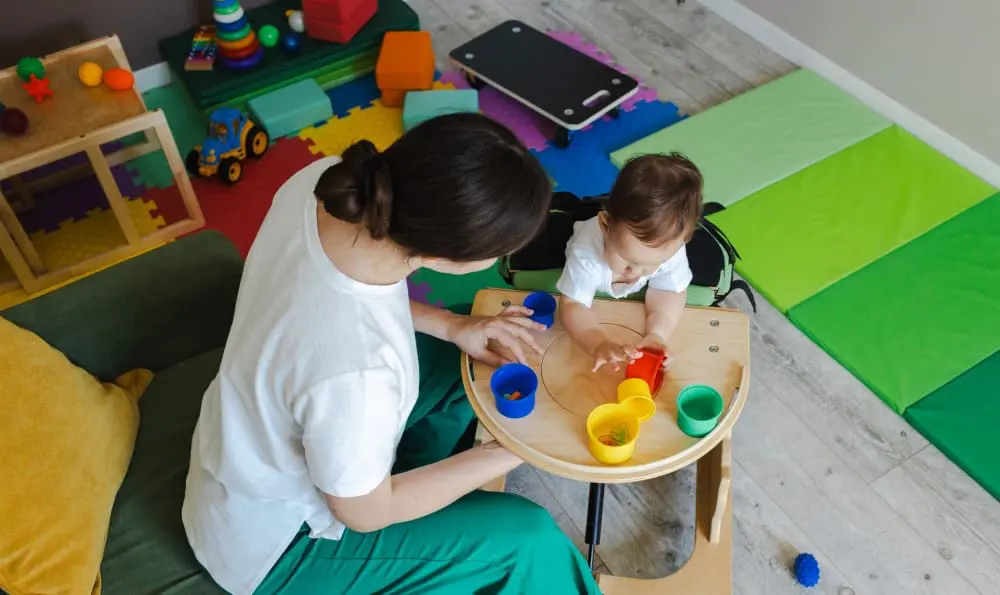
Screenings and diagnostics are core to the evaluation, varying by age and needs. A screening typically lasts 1.5 to 3 hours, with parents present when helpful. We use screening tools to assess communication, social skills, and behaviors through structured activities.
Common instruments include:
- The Autism Diagnostic Observation Schedule, Second Edition (ADOS-2), a play-based tool observing interactions and creativity.
- The Modified Checklist for Autism in Toddlers, Revised (M-CHAT-R), a quick parent questionnaire for ages 16 to 30 months.
- The Childhood Autism Rating Scale (CARS), which rates behaviors across areas like adaptation and verbal responses.
At Scottsdale PBS, our specialists select the appropriate tools for each child, often combining them for comprehensive results and medical diagnosis. This phase focuses on natural behaviors, ensuring the process feels supportive rather than overwhelming.
The Recommendation Meeting: Gaining Clarity on the Diagnosis
After the assessment, a follow-up meeting reviews findings. You’ll receive a detailed report covering history, results, impressions, and suggestions. The specialist explains these, highlighting how they point to ASD or other needs. If ASD is confirmed, discussions turn to interventions like ABA therapy, which uses positive strategies to foster growth.
This meeting empowers you with knowledge, outlining paths forward. Scottsdale PBS ensures recommendations align with your child’s unique profile and circumstances, connecting families to services that promote progress in language, social engagement, and independence.
Why Early Detection Through Evaluation Matters
Identifying ASD early transforms long term outcomes. Children’s brains are highly adaptable when they’re young, so learning about their diagnosis and having an early identification of autism can help with starting support and therapeutic interventions before age 3 maximizes benefits. For example, a toddler evaluated at 18 months might begin therapy to improve speech, reducing frustrations and boosting confidence. Delays in detection can limit these opportunities, but timely evaluations open doors to therapies that enhance school readiness and relationships.
Research supports that children who are diagnosed and receive early interventions show stronger advancements in key areas. Scottsdale PBS emphasizes this in our reliable ABA therapy for toddlers in Scottsdale, tailoring plans to leverage these critical windows.
What Parents Can Do to Facilitate Early Detection
Your involvement is key. Track developments using an evaluation checklist and consult your doctor if delays appear. Request developmental screenings at 18 and 24 months, as recommended. If needed, seek specialist input promptly.
Document behaviors specifically, like “avoids group play” or “repeats phrases often.” Stay engaged in the process, asking questions and advocating for your child. Resources like parent groups can offer additional guidance.
Scottsdale PBS: Your Partner in Early Detection, Diagnostic Evaluation, and Support
At Scottsdale Pediatric Behavioral Services, we dedicate ourselves to helping children with ASD and related conditions thrive. Our 17,000-square-foot facility in Scottsdale creates a nurturing space with advanced classrooms that welcome families. We address ASD, oppositional defiant disorder, obsessive-compulsive disorder, sensory processing issues, and speech challenges through assessments, early interventions, parent training, language development, behavior management, social skills, and self-care programs.
We facilitate swift connections to specialists, often within days. If early signs concern you, contact us for a diagnostic evaluation and let us create a personalized plan. Our assessment team stands ready with expertise and empathy to support your journey.
Early ASD diagnosis through testing is a gateway to brighter possibilities for your child’s future. Reach out to Scottsdale PBS today to begin your family’s journey!